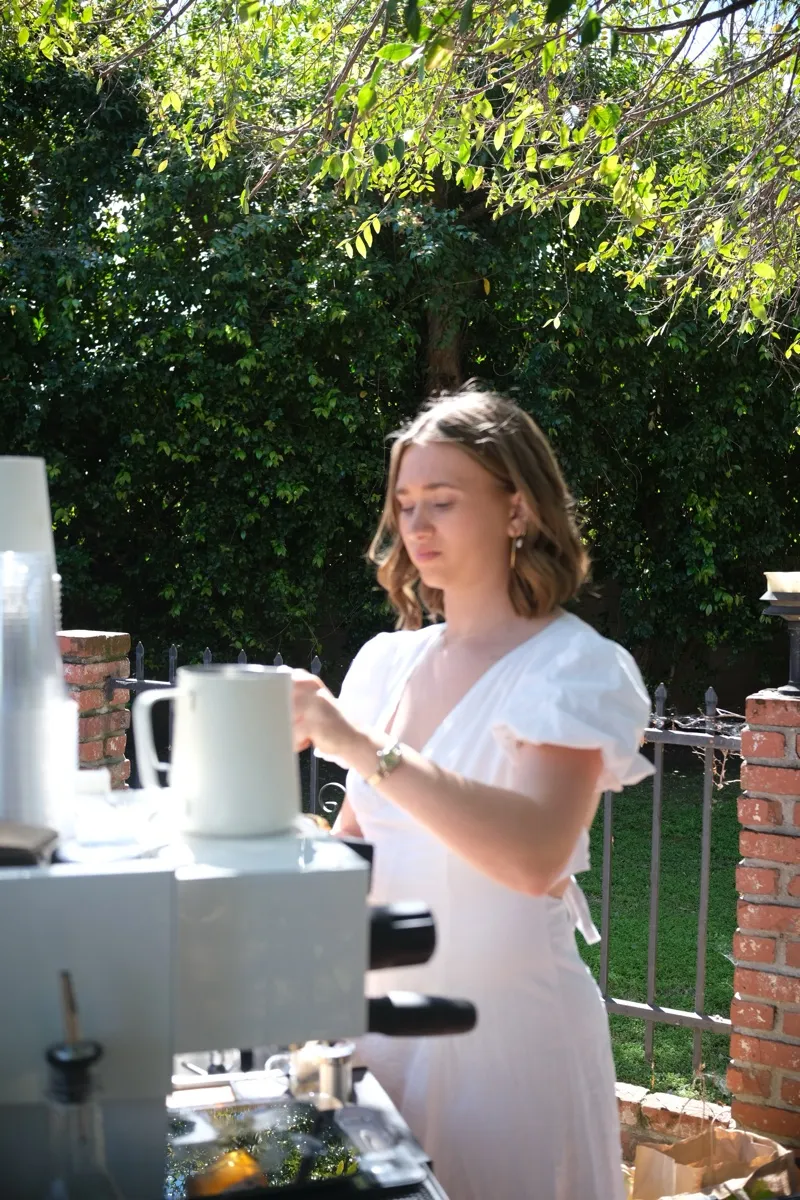
A wedding coffee cart is both hospitality and atmosphere. It gives guests something freshly made, creates a natural gathering place and can be styled to feel intentional beside the rest of the celebration.
Choose the moment before the menu
The best service time depends on the kind of wedding you are planning. Start by deciding what job the coffee cart should do.
- Guest arrival: welcoming for daytime, winter and outdoor ceremonies.
- Cocktail hour: gives non-drinkers an elevated option and fills the transition before dinner.
- Dessert: pairs naturally with cake and brings energy back before dancing.
- Late night: helps guests reset, but demand can arrive in one concentrated rush.
- Farewell brunch: makes coffee part of the main experience rather than an add-on.
If coffee is served after dinner, ask the planner and caterer when speeches, cake cutting and dancing begin. Opening the cart during another major moment can leave it quiet—and then suddenly overwhelm it when that moment ends.
Estimate drinks from the guest experience
Planning around one drink per guest is a sensible baseline for a focused service period. Increase the allowance when coffee is a primary beverage, service lasts several hours or guests can return for a second round.
Guest count also affects service speed. A smaller menu and clearly displayed choices help a single barista move efficiently. Larger weddings or short rush windows may need a second person even if the total number of drinks is manageable.
Create a wedding menu guests can read quickly
Four to six core choices are usually enough. A balanced menu might include:
- Latte, served hot or iced
- Vanilla latte or another signature flavor
- Cappuccino
- Americano
- Espresso
- Matcha, tea or hot chocolate as an optional addition
Alternative milk, decaf and one non-coffee drink can make the cart more inclusive. If the menu includes a custom drink, give it a short name and a simple recipe so guests can order quickly.
Make the cart belong in the room
Share the invitation, floral palette or mood board before the event. Menus, flowers, cup details and small signs can echo the wedding without turning the cart into a competing installation. Ask the venue where the queue will form and look at the cart from the photographer’s likely angles.
A garden-inspired cart works especially well for courtyard, estate, greenhouse and outdoor weddings, but botanical details can also soften a hotel or industrial venue.
Confirm the venue requirements
Your planner or venue should confirm:
- Load-in time and vendor entrance
- Elevators, stairs and doorway measurements
- A suitable electrical outlet and circuit
- Fresh-water and wastewater arrangements
- Parking, valet and vendor fees
- Outdoor shade, wind and rain backup
- Insurance or certificate requirements
For venues in Malibu, Downtown LA, the Hollywood Hills or other access-sensitive areas, parking and load-in can materially change the setup. Share the venue contact early.
When should you book?
Popular Saturdays and spring or fall wedding dates should be reserved as soon as the venue and timeline are firm. Earlier booking also leaves time for a custom menu, signage and coordination with the planner.
When requesting a quote, include the date, venue, guest count, desired service hours and whether you want matcha, alternative milks or custom styling. Those details create a more accurate proposal than the guest count alone.
Explore our broader Los Angeles coffee cart catering guide or tell us about your wedding.